
One of cannabis’s most fascinating compounds wears two hats and may hold the key to new therapeutic potential. Among hundreds of terpenes produced by the plant, only one stands apart as both a terpene and a cannabinoid: β-caryophyllene. This unique dual identity has scientists excited, and consumers curious, about its powerful role in the endocannabinoid system.
Terpenes 101: More Than Just Aroma
If you’ve ever stopped to smell fresh cannabis flower, you’ve already met terpenes, the aromatic molecules that give each cultivar its unique scent and flavor. Limonene brings citrusy brightness, pinene adds a pine forest freshness, and myrcene leans earthy and relaxing. But terpenes do more than smell good, they shape your cannabis experience. They interact with cannabinoids and your body’s endocannabinoid system, influencing everything from mood and stress to focus and inflammation.
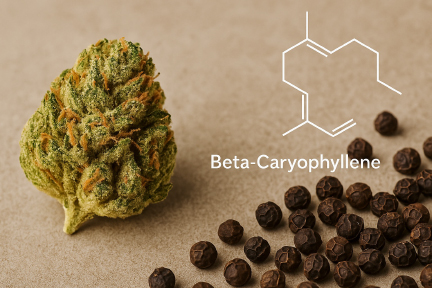 🔬 What Makes β-Caryophyllene Unique
β-Caryophyllene (BCP) is a sesquiterpene commonly found in black pepper, cloves, hops, rosemary, and many cannabis strains such as GSC, Bubba Kush, and Sour Diesel. It’s known for its spicy, peppery aroma, but it’s what happens inside your body that makes it truly special.
Unlike most terpenes, β-caryophyllene doesn’t just influence your endocannabinoid system, it **activates** it. Specifically, BCP binds directly to **CB2 receptors**, which are found throughout the immune system and peripheral tissues. This is significant because CB2 activation plays a critical role in regulating inflammation, pain, and immune responses, all without the psychoactive effects associated with CB1 receptor activation by THC.
BCP as a Cannabinoid: Therapeutic Potential
Scientists now refer to β-caryophyllene as a “dietary cannabinoid,” meaning it behaves like a cannabinoid despite being a terpene. This dual role has far-reaching implications for health and wellness:
✅ **Anti-inflammatory effects:** BCP may help reduce chronic inflammation through immune modulation.
✅ **Pain relief:** Preclinical studies show potential for alleviating neuropathic and inflammatory pain without intoxication.
✅ **Gut and metabolic health:** Its action on CB2 receptors in the digestive system may support metabolic balance and gut function.
✅ **Neuroprotection:** Early evidence suggests BCP could help manage neuroinflammation, with possible applications in neurodegenerative conditions.
Synergy and the Entourage Effect
Like other terpenes and cannabinoids, β-caryophyllene works best as part of the entourage effect, the synergistic interaction of multiple compounds in the plant. For instance:
– Combined with **THC**, BCP may enhance analgesic effects without intensifying psychoactivity.
– Paired with **CBD**, it may boost anti-inflammatory potential.
– In terpene-rich profiles with **linalool** or **limonene**, BCP can contribute to more targeted therapeutic outcomes.
This is why full-spectrum cannabis products, those that preserve terpenes and minor cannabinoids, are often more effective than isolates.
What This Means for Consumers
If you’re choosing cannabis for inflammation, pain, or wellness, β-caryophyllene is one terpene to watch. Look for strains with a spicy, peppery aroma, often a giveaway that BCP is present. Ask your dispensary for terpene profiles or review lab test results to identify products rich in this powerful compound.
The True Harmony Approach
At True Harmony Co., we believe cannabis should be appreciated as a whole-plant experience, rich in terpenes, cannabinoids, and all the minor compounds that make the plant extraordinary. By cultivating under natural sunlight and focusing on full-spectrum expression, our flower delivers not just potency, but harmony, including powerful compounds like β-caryophyllene.
Final Thought
β-Caryophyllene proves that cannabis is far more than THC and CBD. As the only terpene that also acts as a cannabinoid, it bridges two worlds, aromatic and therapeutic, unlocking new possibilities for natural healing and wellness. So next time you explore cannabis, don’t stop at potency. Look deeper into the terpene profile, and keep an eye out for this spicy powerhouse.